

Our Services
Ankle Sprain Recovery
Expert Physiotherapy for Ankle Sprain Recovery and Chronic Ankle Instability Treatment
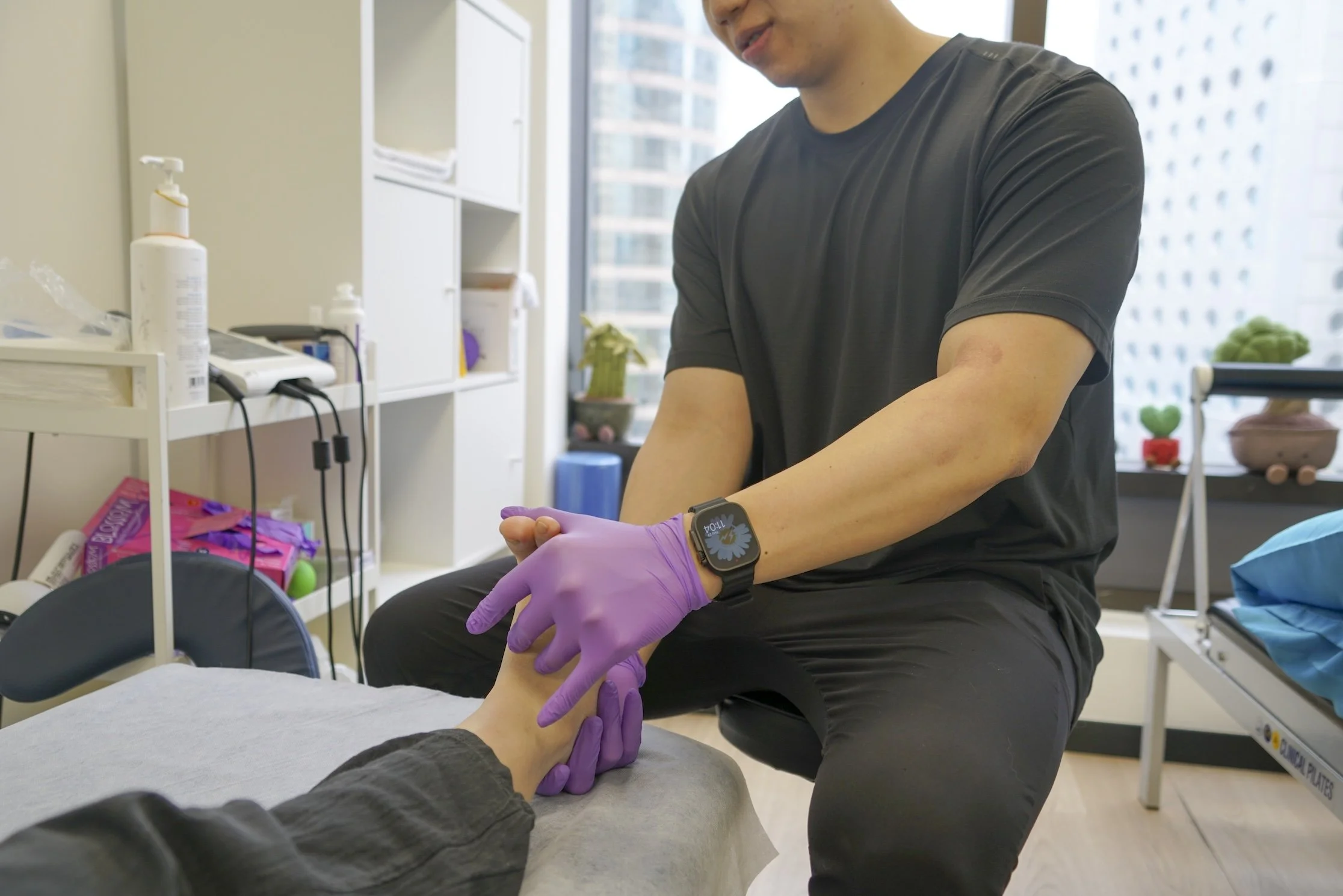
How can our Physiotherapists help with Ankle Sprain?
The ankle joint is a complex structure to absorb impact, maintain balance, and initiate movement. Ankle injuries can lead to dysfunction in the knee, hip, or back. Our team specializes in addressing this by providing comprehensive assessments and targeted interventions for ankle sprains.
By evaluating the injury grading, ligament stability, muscle strength, and movement patterns, our physiotherapists can tailor treatments to the root causes of pain and instability. Manual therapy, rehab exercises, and proprioception training can restore range of motion, functional strength, and balance. We aim to bullet-proof your ankles to prevent future injuries, and avoid chronic ankle instability (CAI).
Ankle Sprain Treatment & Rehabilitation | Symptoms, Diagnosis, and Recovery
Understanding the Root Causes of Your Rolled Ankle Injury
An ankle sprain occurs when the strong ligaments supporting the ankle stretch beyond their limits or tear. The most common type is an inversion sprain, which injures the ligaments on the outside of the ankle. Factors that make you vulnerable to this injury include:
Trauma: A sudden twist or rolled ankle, often on uneven ground or during a fall.
Sports Injuries: High-risk activities like basketball, soccer, or trail running.
Previous Sprains: A history of ankle sprains is the leading cause of chronic ankle instability (CAI).
Weak Ankle Muscles: Insufficient strength in the supporting muscles, especially the peroneal muscles.
Improper Footwear: Shoes that lack adequate support for your activity.
Symptoms of Ankle Sprains can include:
Symptoms vary based on the severity (Grade 1, 2, or 3) but typically require professional ankle physiotherapy for full resolution:
Immediate Pain: Sharp or throbbing pain, especially after a lateral ankle sprain.
Swelling and Bruising: Rapid onset of swelling and discoloration around the joint.
Tenderness: Pain when the ankle is touched or pressed.
Inability to Bear Weight: Difficulty or inability to walk or put pressure on the injured foot.
Joint Instability: A persistent feeling that the joint is loose or "giving way."
Assessment and Diagnosis
Our physiotherapists perform a thorough assessment to determine the severity and exact structures injured, ensuring no fracture is present. We use:
Detailed History: Understanding the injury mechanism and your specific goals (e.g., safe return to sport after ankle sprain).
Manual Tests: Assessing ligament integrity and joint stability (e.g., Anterior Drawer Test).
Functional Evaluation: Observing movement, including walking, hopping, and balance, to tailor your ankle sprain recovery program.
Ankle Sprain Treatment Sessions and Protocol
Our approach follows the modern P.O.L.I.C.E. principle (Protection, Optimal Loading) to accelerate tissue healing and guide you safely through recovery. We provide a phased plan for effective sprained ankle rehabilitation:
Acute Phase (Pain & Swelling Reduction): Application of ice and compression, coupled with early, pain-free mobility exercises. We provide education on the R.I.C.E. vs P.O.L.I.C.E. protocol.
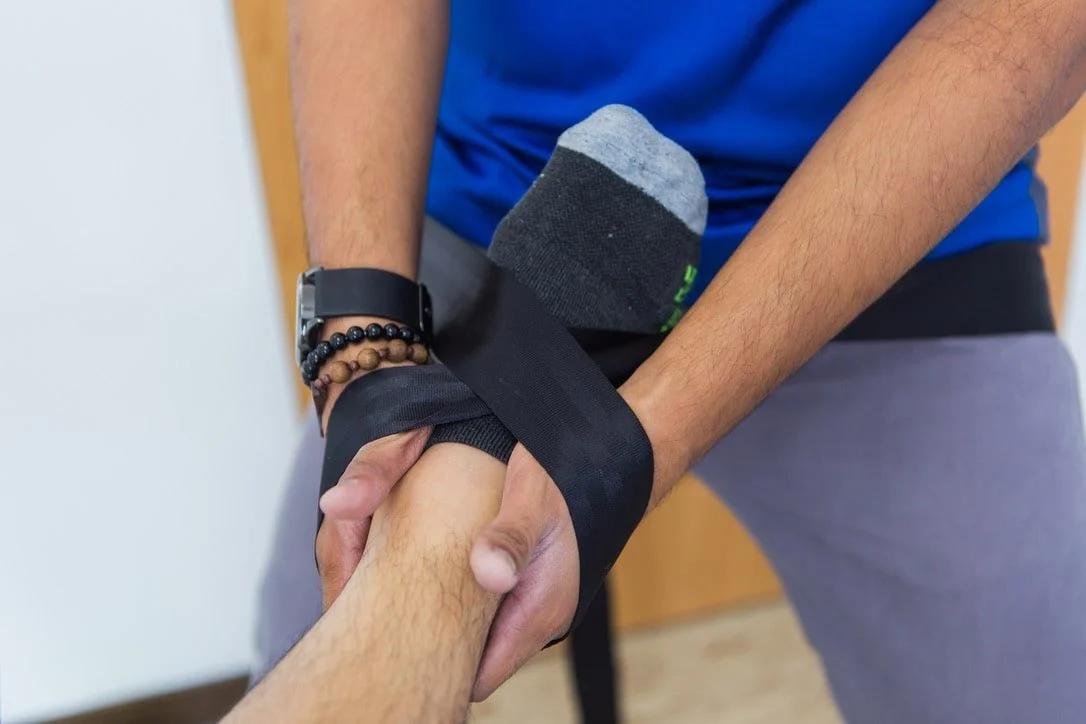
Manual Therapy: Hands-on techniques like soft tissue release and gentle graded joint mobilisations to reduce muscle guarding and restore normal ankle motion.
Progressive Strengthening: Targeted resistance exercises, including those for the peroneal muscles, to build stability and power.
Neuromuscular Control Training: Critical exercises using wobble boards and single-leg balance to restore proprioception and prevent re-injury.
Functional & Sport-Specific Retraining: Safely reintroducing activities like jumping, landing, and running for a complete return to sport clearance.
Injury Prevention Advice: Recommendations on supportive footwear, ankle taping, and bracing for long-term protection.