
Stop the "Rest-Run-Pain" Cycle: A Modern Guide to Shin Splints
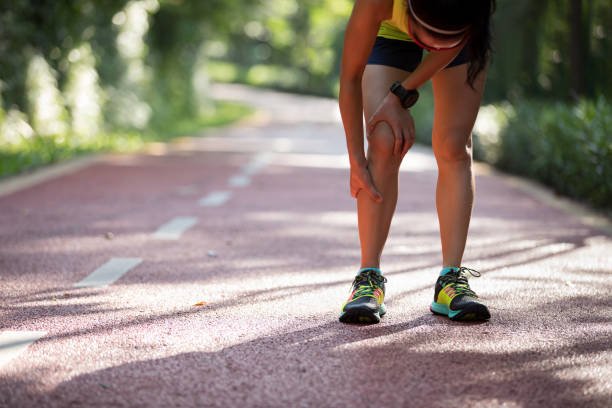
If you’ve ever started a new running routine only to be sidelined by a nagging, dull ache along your inner shin, you know how frustrating shin splints can be. Most runners follow a predictable pattern: they feel pain, they rest for a week until it fades, and then they head back out only for the pain to return within the first mile.
As a physiotherapist, I see this regularly. The reason most people fail to recover is that they are treating a symptom rather than the actual cause.
A New Way to Look at Your Pain
In the medical world, we call this Medial Tibial Stress Syndrome (MTSS). However, researchers have proposed a new, more descriptive name: Load-Induced Medial-Leg Pain (LIMP).
This name change is important for you as a runner because it shifts the focus away from a mysterious syndrome and toward the real issue: Load. Your shinbone is a living tissue that adapts to stress, similar to how a muscle grows. If you add stress faster than the bone can remodel itself, it begins to protest with pain.
Why Is This Happening to You?
Research shows that up to 70% of runners experience this in a period of one year. While every runner is different, the trigger is usually a combination of two things:
The "Single Session" Spike: While we used to blame weekly mileage, research suggests that injury risk increases when you push a single run more than 10% further than your longest run of the last month.
The Shock Absorption Gap: If your glutes are weak or your foot overpronates(rolls inward too much), your shinbone is forced to absorb the impact that your muscles should have handled.
The Danger of the "Wait and See" Approach
The biggest mistake runners make is assuming that if the pain goes away with rest, the injury is healed. In reality, MTSS exists on a continuum. If left unmanaged, the micro damage in the bone can progress into a full stress fracture, which can sideline you for months rather than weeks.
Differentiating between a standard load pain and the early stages of a bone fracture is impossible to do at home. It requires a clinical assessment where we look at your history, functional hopping capacity, and movement biomechanics.
How We Get You Back on the Road
Our goal isn't just to stop the pain, it's to make your legs bulletproof. Our evidence based approach includes:
Gait Retraining: We use cues in adjusting your step rate that have been shown to reduce the impact on your shins.
Targeted Loading: We provide specific exercises for the hidden muscles of the calf called the soleus and the hips to take the pressure off your bones.
Return to Run Map: Instead of guessing, we give you a structured plan that uses specific rules to tell you exactly when to push and when to pull back.
Don’t let a temporary ache become a permanent setback. Book an assessment today so we can analyze your running form and build a plan that keeps you on the pavement.
-
Beck, B. R., & Jones, S. (2019). Managing shin splints in runners: Evidence-based approaches. Sports Health, 11(6), 501–507. https://doi.org/10.1177/1941738119874160
Hoenig, T., Hollander, K., Popp, K. L., Fredericson, M., Kraus, E. A., Warden, S. J., & Tenforde, A. S. (2025). International Delphi consensus on bone stress injuries in athletes. British Journal of Sports Medicine, 59(2), 78–90. https://doi.org/10.1136/bjsports-2024-108616
Moen, M. H., Tol, J. L., Weir, A., Steunebrink, M., & Dijkstra, P. U. (2009). Medial tibial stress syndrome: A critical review. Sports Medicine, 39(7), 523–546. https://doi.org/10.2165/00007256-200739070-00003
Nielsen, R. O., et al. (2025). Single-session mileage spikes and overuse injury risk: A 18-month prospective study of 5,000 runners. British Journal of Sports Medicine, 59(4), 212–225.
Schuster Brandt Frandsen, J., Hulme, A., Parner, E. T., Møller, M., Lindman, I., Abrahamson, J., Sjørup Simonsen, N., Sandell Jacobsen, J., Ramskov, D., Skejø, S., Malisoux, L., Bertelsen, M. L., & Nielsen, R. O. (2025). How much running is too much? Identifying high-risk running sessions in a 5200-person cohort study. British journal of sports medicine, 59(17), 1203–1210. https://doi.org/10.1136/bjsports-2024-109380
Ciszewski P, Drelichowska A, Azierski M. Shin Splints - a hidden epidemic among runners and athletes: a review of the current state of knowledge. Medical Science 2025; 29: e79ms3571.https://doi.org/10.54905/disssi.v29i160.e79ms3571
Anderson, L. M., Warden, S. J., Willy, R. W., Bonanno, D. R., & Menz, H. B. (2025). Medial Tibial Stress Syndrome Needs a New Name-Make No Bones About It. The Journal of orthopaedic and sports physical therapy, 55(10), 621–622. https://doi.org/10.2519/jospt.2025.13411
Fredericson, M., & Misra, A. K. (2007). Epidemiology and aetiology of marathon running injuries. Sports Medicine, 37(4–5), 437–439. https://doi.org/10.2165/00007256-200737040-00004
Alfayez SM, Ahmed ML, Alomar A (2017). A review article of medial tibial stress syndrome. J Musculoskelet Surg Res,1:2-5. doi: 10.4103/jmsr.jmsr_13_17
Ready to Start Your Journey? Book A Physiotherapy Session With Nicole Today!
Reaching out to a physiotherapist can be the turning point in your recovery. We're here to help you get back to doing the things you love, without being held back by pain.