
Why Clinical Pilates Beats Generic Exercise, According to New Research
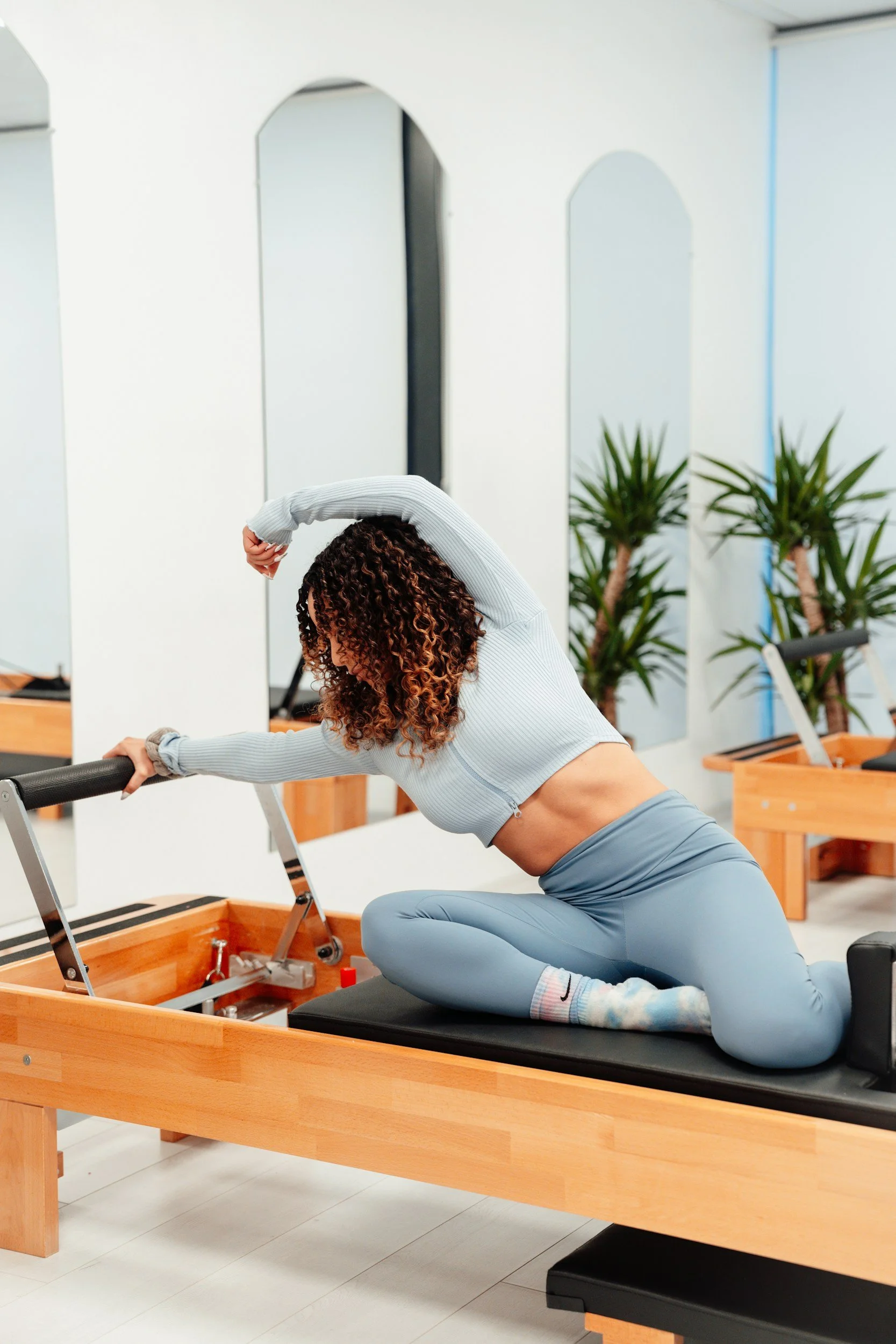
When you think of Pilates, you might picture people stretching on mats in a calm studio. But there is a more powerful, medically-grounded version gaining traction in the rehab world: Clinical Pilates.
New research published in 2025 confirms that while all movement is good movement, Clinical Pilates is significantly more effective than generic Pilates or generic exercise for fixing chronic pain, improving mobility, and getting long-term results .
If you have been suffering from back pain, recovering from an injury, or just not getting results from the gym, here is why the "clinical" approach is the game-changer you need.
What Makes Clinical Pilates Different?
To understand why it is better, we have to look at how it is taught. Generic exercise, whether that is a home workout video or a standard gym class, often takes a "one-size-fits-all" approach. Clinical Pilates is the opposite.
It is usually delivered by highly trained physiotherapists or health professionals who perform an initial assessment of your body. They look at muscle imbalances, faulty movement patterns, and the root cause of your pain. Instead of just giving you a list of exercises, they use specialized equipment (like Reformers and Trapeze tables) to either support weak areas or challenge unstable ones .
It isn't just a workout; it is rehabilitation disguised as a workout.
The 2025 Evidence: Clinical Pilates Wins Every Time
A rigorous 2025 study published in Disability and Rehabilitation put this to the test. Researchers split adults with chronic lower back pain into three groups:
1. Clinical Pilates
2. General Pilates
3. General Exercise
The results were definitive. At both the 6-week and 12-week marks, the Clinical Pilates group outperformed the others in every major category .
· Pain Relief: Clinical Pilates reduced pain significantly more than general exercise. We are talking about a mean difference of over 2 points on the pain scale—which is the difference between constant discomfort and feeling nearly normal .
· Functionality: Patients found it easier to bend, lift, and perform daily tasks without discomfort.
· Biomechanics: Using 3D motion analysis, the study found that the Clinical Pilates group showed superior improvements in how they actually moved (specifically in "terminal knee flexion" and "mediolateral sway path"), meaning their bodies were physically functioning better, not just feeling better .
The takeaway? Specificity matters. You cannot just "exercise" your way out of a bad back; you have to retrain the specific muscles and movement patterns that are broken. That is what Clinical Pilates does.
It Works for Extremities, Too (Not Just the Spine)
For years, Pilates has been the gold standard for back pain. But a massive 2025 systematic review (a study of studies) published in the Annals of Physical and Rehabilitation Medicine looked at its effects on the arms and legs .
The findings were impressive. For people with musculoskeletal conditions in their extremities (like shoulder issues or knee osteoarthritis), Pilates was shown to:
· Lessen pain significantly.
· Reduce disability.
· Improve quality of life .
While the authors note that more research is needed on why it works so well, the evidence suggests that the principles of core control and alignment used in Clinical Pilates help take the load off injured joints elsewhere in the body.
Good News: You Don't Have to Kill Yourself to See Results
A common misconception about exercise is "no pain, no gain." However, a recent randomized trial focusing on chronic low back pain found something surprising: Low-intensity Pilates works just as well as high-intensity Pilates .
Researchers followed 168 people over 6 weeks and then checked on them again at 6 and 12 months. They found "negligible differences" in pain and disability between those who pushed hard and those who took it easy .
Why this matters for you:
If you are scared to start exercising because you think it will hurt, don't be. The study found that low-intensity exercise had far fewer adverse events (like muscle soreness or strain). Physiotherapists now recommend starting slow. With Clinical Pilates, you get the benefits of pain relief without the risk of burning out or hurting yourself .
Finding the "Sweet Spot": How Much is Enough?
If you are ready to start, you might wonder how often you need to go. A 2025 scoping review on "Pilates Dosage" looked at all the latest data to find the optimal prescription .
For adults with musculoskeletal conditions, the research suggests the "sweet spot" is:
· Duration: 6 to 8 weeks.
· Frequency: 2 to 3 sessions per week.
· Session Length: 50 to 60 minutes .
This is enough time to create neuromuscular change (teaching your brain and muscles to work together) without overtaxing your schedule or your body.
The Verdict: Why Switch to Clinical Pilates?
The latest evidence is clear. While jogging on a treadmill or doing a standard gym circuit is good for your heart, it often fails to address the specific mechanical issues causing your pain.
Clinical Pilates is better because it offers:
1. A Personalized Diagnosis: It starts with you, not a script.
2. Faster Pain Relief: Proven to reduce pain more effectively than generic exercise .
3. Better Movement Quality: It fixes how you move, which prevents future injury .
4. Safety: You get results with a lower risk of injury by working at the right intensity .
Whether you are dealing with a chronic condition or just want to move better, Clinical Pilates bridges the gap between the gym and the physio clinic.
Ready to move better and feel stronger? Consult with a senior physiotherapist who offers Clinical Pilates to see how a targeted program can help you.
References
Kwok, B. C., Lim, J. X. L., Wong, J. K. H., Tan, J. J. R., Kumar, K., Smith, H. E., & Kong, P. W. (2025). DMA Clinical Pilates improves pain, disability, and biomechanical outcomes in chronic low back pain: a randomised controlled trial. Disability and Rehabilitation, 1–14. Advance online publication. https://doi.org/10.1080/09638288.2025.2563762
Barnet-Hepples, T., Barros Amorim, A., de Azeyêdo Nogueira, C., Silva de Melo, M. C., Borges Dario, A., Latey, P., Alves Gomes, S. R., & de Brito Macedo, L. (2025). Pilates lessens pain and disability and improves quality of life in people with musculoskeletal conditions in the extremities: A systematic review. Annals of Physical and Rehabilitation Medicine, 68(6), 101973. https://doi.org/10.1016/j.rehab.2025.101973
Coelho, A. C. S., et al. (2025). High-intensity and low-intensity Pilates have similar effects on pain and disability in people with chronic non-specific low back pain: a randomised trial. Journal of Physiotherapy, 71(2), 100–107. https://doi.org/10.1016/j.jphys.2025.03.002