
Pickleball : What Happens When Your Smash Fights Back
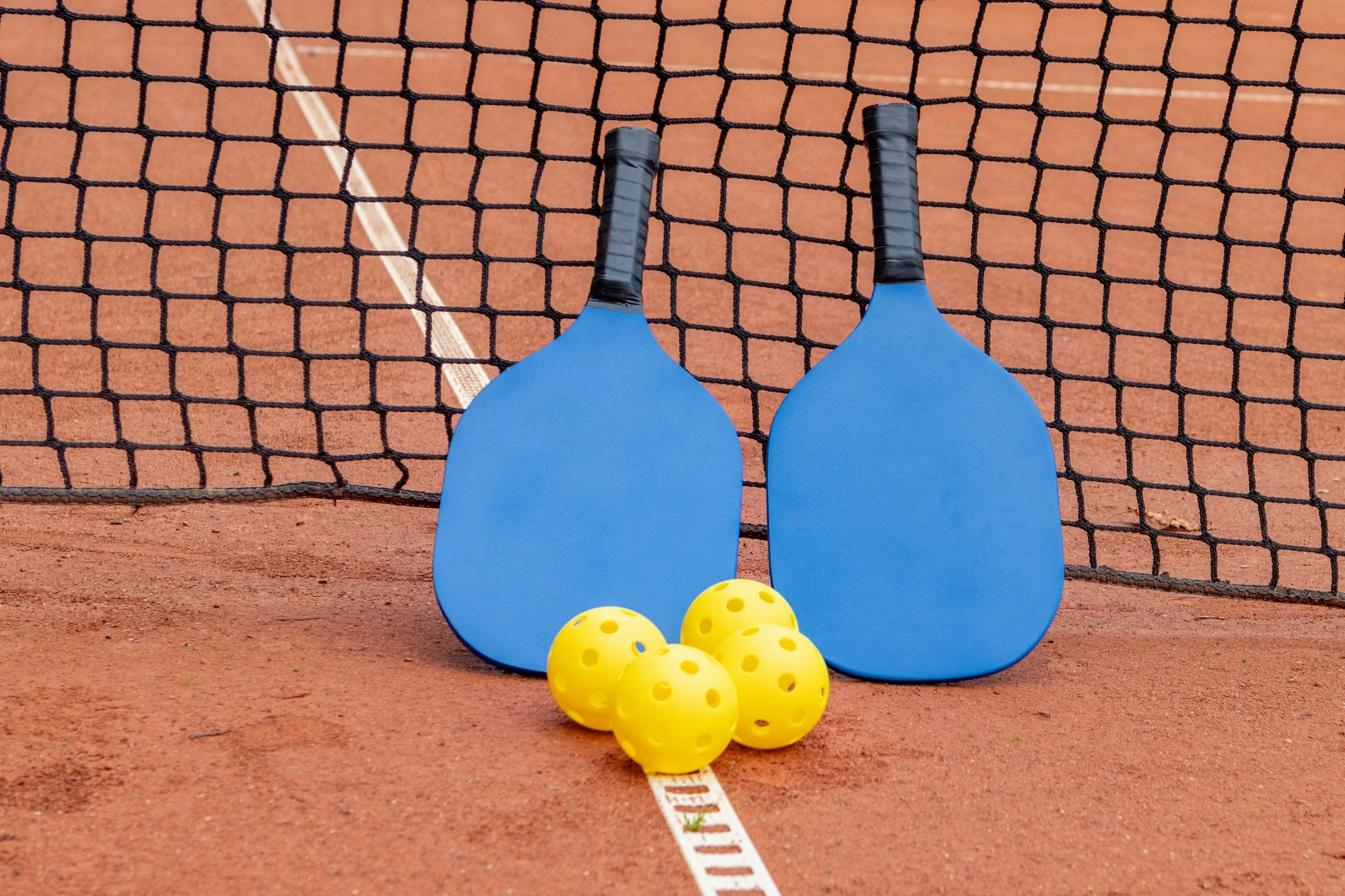
Understanding shoulder pain in pickleball and how to keep your game strong and injury free.
Pickleball has quickly become one of the most popular recreational sports. It’s easy to learn, to socialize, and a great way to stay active. However, as players spend more time on the court practicing their serves, volleys and powerful overhead smashes, some may begin to notice an unwelcome opponent: a shoulder pain.
Pickleball involves frequent overhead motions and quick arm swings, so that our shoulders become strained. Understanding how shoulder injuries happen and how to prevent them can help players enjoy the game without any setbacks.
Why Do Our Shoulders Get Injured During Pickleball?
A shoulder injury in pickleball usually occurs when our muscles, or ligaments around the shoulder joint become overused. Our shoulder heavily relies on a group of muscles called Rotator Cuff, which helps stabilize our joint and control arm movements.
In Pickleball there are a lot of repeated overhead movements such as serves and smashes, and this places stress on these structures. Over time, this can lead to conditions such as rotator cuff strain, shoulder impingement, or tendon irritation. When there is not enough support and recovery while performing powerful swings repeatedly, the tissues may become injured.
How Do Shoulder Injuries Happen in Pickleball?
Repetitive Overhead Movements
Serving and smashing require the arm to repeatedly move overhead, which places stress on the shoulder muscles and tendons.Decreased Shoulder Strength or Stability
If the muscles that stabilize the shoulder are weak, the joint may not be able to handle repetitive swings effectively.Improper Technique
Using excessive force or incorrect form during serves or overhead shots can overload the shoulder.Sudden Increase in Playing Time
Playing longer sessions or increasing intensity too quickly can cause overuse injuries.Insufficient Warm-Up & Cool Down
Jumping straight into a game without preparing the muscles can increase injury risk. It’s also important to have a prolonged stretch after a game.
Here Are Some Simple Exercises to Support Your Shoulder
Before starting any exercise program, make sure movements are pain-free and controlled. If pain increases, it is best to stop and consult a healthcare professional.
1. Shoulder External Rotation (with Resistance Band)
This exercise strengthens the rotator cuff muscles, which help stabilize the shoulder during overhead swings.
How to do it:
Attach a resistance band to a stable object at elbow height.
Stand sideways to the anchor point and hold the band with the hand farthest from it.
Keep your elbow bent at 90° and close to your body.
Slowly rotate your forearm outward while keeping your elbow tucked in.
Return slowly to the starting position.
Repetitions: 10-12 reps; 2-3 sets
2. Scapular Retraction (Shoulder Blade Squeeze)
This exercise strengthens the upper back muscles, which help support proper shoulder movement.
How to do it:
Sit or stand with good posture.
Gently squeeze your shoulder blades together as if trying to hold a pencil between them.
Hold for about 3–5 seconds.
Relax and repeat.
Repetitions: 10–12 reps, 2–3 sets.
3. Wall Angels
This exercise improves shoulder mobility and posture, which can reduce strain during overhead movements.
How to do it:
Stand with your back against a wall.
Place your arms against the wall in a “goalpost” position.
Slowly slide your arms upward while keeping them in contact with the wall.
Lower them back down in a controlled motion.
Repetitions: 8–10 reps, 2–3 sets.
When Should You See a Physical Therapist?
It may be helpful to consult a physical therapist if you experience:
Shoulder pain that persists after playing
Difficulty lifting or moving your arm overhead
Weakness during serves or smashes
Pain that affects your ability to play pickleball
Repeated shoulder discomfort after games
A physical therapist can evaluate your movement, identify the source of the problem, and design a program to improve strength, mobility, and shoulder stability, helping you safely return to the sport.
Play Longer, Play Stronger
Pickleball is meant to be fun, social, and energizing, not painful.
If your shoulder starts sending warning signals, don’t ignore them. Addressing discomfort early and seeking professional guidance when needed can help keep you on the court, enjoying every serve, volley, and smash for years to come.
References:
American Academy of Orthopaedic Surgeons. (2022). Rotator cuff tears. https://orthoinfo.aaos.org/en/diseases--conditions/rotator-cuff-tears/
American Physical Therapy Association. (2020). Physical therapy guide to rotator cuff tear. https://www.choosept.com/guide/physical-therapy-guide-rotator-cuff-tear
National Institute of Arthritis and Musculoskeletal and Skin Diseases. (2023). Shoulder problems. https://www.niams.nih.gov/health-topics/shoulder-problemsexercises.
Ready to Start Your Journey? Book A Physiotherapy Session With Shannen Today!
Reaching out to a physiotherapist can be the turning point in your recovery. We're here to help you get back to doing the things you love, without being held back by pain.